
The Casita Chronicles
A new series about building a house in Mexico from the ground up.

About a year ago, Andrea came into my office and gingerly sat down on the couch that sits under the windows looking out over our valley.
“There’s something I’d like to talk to you about,” she said.
I swiveled in my chair. “Go for it.”
“My mom wants to move here.”
“Yeah, that makes sense,” I replied, completely unsurprised.
Andrea is from remote Montana and grew up, literally, on the side of a mountain. It’s ruggedly beautiful there, a slope filled with pine trees and wildflowers and fruiting trees, and her parents, who separated some years ago, have maintained an active and quite social life that includes seeing each other practically every day.
One of the defining features of life an hour south of Missoula, though, is the weather. Montana has a fire season that corresponds with the summer and fall, a time when it’s not uncommon for ash to fall from the sky or for people to talk very plainly about their emergency evacuation plans and what they might take with them or leave behind to be consumed by the flames. That period of fire, smoke, and uncertainty is followed by, without exaggeration, six months of winter. The snow begins to fall early- to mid-October—right around the time the fires end—and the relentless cold, many feet of snow, and deep frosts relent, if they’re lucky, in early April.
When I was a kid, my mom would read us with some regularity The Cremation of Sam McGee, a poem that, thinking about it now as an adult with my own kid, really isn’t suitable for children. A prospector in the Yukon is so frozen to the bone that, when he eventually succumbs to the ice, the act of his friend cremating him brings him back from death. Montana winters aren’t that bad of course, but they are serious, heralding the type of weather that could truly kill you and which for months will keep you indoors in front of the wood stove with a hot kettle not too far from hand.
The Cremation of Sam McGee certainly captures my own sentiments about the winter and the cold. As a teenager I learned to cross country ski, snow shoe, and ice skate (badly), and I hated doing all three. As an adult, I eventually found things about winter I came to enjoy. Sub-zero night walks circling the Central Park reservoir, Dutch ovens filled with tender chunks of beef simmering in a beer-darkened gravy, or perhaps confit duck legs bobbing amongst tender white beans and French sausage, and, of course, New York lit up brightly with Christmas lights. But the nice things don’t alleviate the bad. My soul cries out for the green of summer.
When Andrea told me her mom wanted to come live with us, I thought of those mountainous winters. Six months of winter isn’t a season, it’s a prison sentence. The idea of wanting to escape ice and mud caked boots for Oaxaca’s dust, spines, and perpetually greenery, for green and golden hummingbirds drinking from the hibiscus bushes and vining, fragrant star jasmine climbing over the entryway to our home, was no doubt appealing. But also to be close to us, and to Leo, especially to Leo, must have drawn powerfully.
I thought, too, of my own childhood in New York with my grandparents just a few blocks away from us. My relationship with them has been more important to me than I could ever effectively convey. Here in Mexico, we are farther from family than we’ve ever been before, but live in a place where most people live in close proximity to their families for their entire lives, maintaining multigenerational homes and having family reunions and gatherings with a regularity that I think, certainly to broad American culture, wouldn’t seem just unfamiliar, but deeply alien. Being able to create that environment here, for Leo, would change his life and enrich our own. Certainly it would make us more Mexican, an appealing thought for an immigrant still getting his sea legs.
Still, while our house is well-suited for guests, we host often and there isn’t really enough space for someone to move in without our losing the ability to host other friends and family. And Purva, like us, values privacy and isolation.
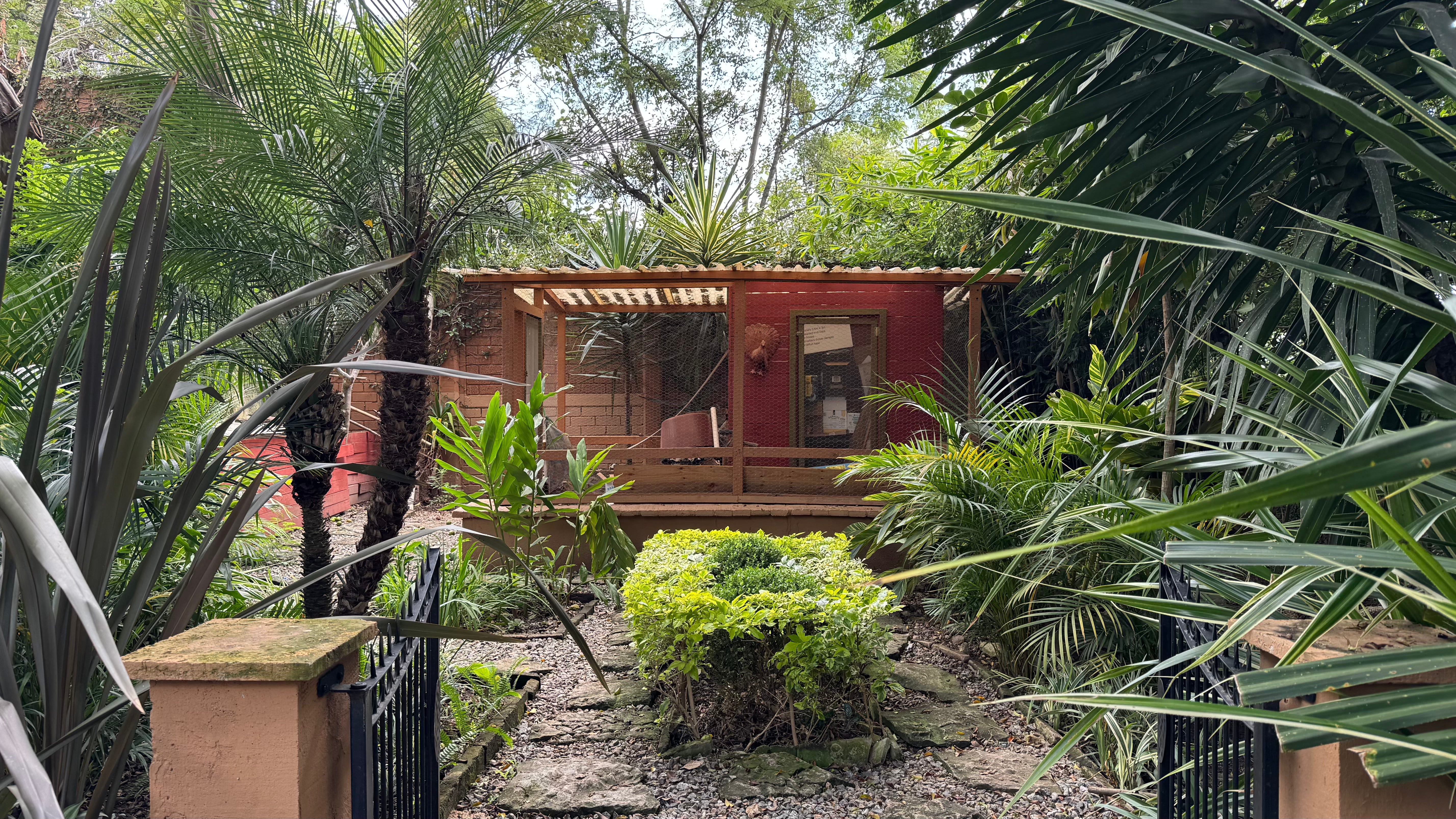
The workable solution was clear. What if she lived with us but in her own separate house? What if we did something Andrea and I had talked about almost since moving in and knocked down our long vacant henhouse and on that same site built a casita, a “little house.” It could be a place for Purva to live during the most grinding, freezing months in Montana and, during the remaining months of the year, somewhere we could use to host other friends and family in even greater comfort than our current guest spaces can provide. And eventually, if it became necessary, it could be a place for Purva to live all year round, close to family in a kind climate, in a place where older people are treated with respect and where in-home medical care is actually affordable.
So, that’s what we’re doing.
This entry today marks the beginning of The Casita Chronicles, a new chapter in A Life in Oaxaca and a turning point in our lives here in Mexico.
For the foreseeable future, I will using some posts at A Year in Oaxaca to document the process of building a house from the ground up here in Mexico. But how we will do this will be a bit different from other stories about home construction.
Most home improvement narratives are told by people who have very little money and who do the bulk of the work themselves, delving into carpentry, tiling, bricklaying, and the hundred other small but significant tasks that go into building a home. One advantage to building a home in Mexico, though, is that while the cost isn’t insignificant, it’s a hell of a lot cheaper to build here than it is in the United States. We’re hiring professionals to do this work for us and if you’re considering building a home in Mexico, that’s almost certainly what you’ll be doing as well.
The Casita Chronicles will walk you through things like site selection, picking an architect, choosing specialists (plumbers, electricians, tiler layers, and etc.), designing a home and picking design elements, buying and designing furniture, and eventually landscaping. It will give you a view of what it’s like to build a house in Mexico when you’ve got some money, but not a ton, and you want a place that’s beautiful and attainable.
Posts from The Casita Chronicles will be posted both here at A Year in Oaxaca and on its own separate Substack carrying the same name as the project. I plan to document this adventure on social media, too, and am in the process of figuring out exactly how I want to do that.
The Casita Chronicles and A Year in Oaxaca will operate as a two-for-one deal. For as long as you’re a paid subscriber to one, you will automatically receive a paid subscription to the other. But, unlike A Year in Oaxaca, The Casita Chronicles will be accessible only to paid subscribers and will have no free entries.
This will be quite an adventure for us, and a life-changing one at that. I hope you follow along with us!
If you need any advice, 😂, we rebuilt a hotel in Costa Rica, which I’m sure has similar challenges! I could save you some headaches maybe! First piece of advice, check laws and regulations- do everything by the ‘book’ (which I also know is a loose term!) 😂 buena suerte
I’m looking forward to following your new story and eventually snagging a night or two in the new casita when it’s done!